AI Watermarks Were Supposed to Solve Content Authenticity. Claude's Rollout Shows Why They're Not Ready Yet.
Regulatory mandates collide with technical limitations watermarks can't overcome.
EU AI Act Article 50 became enforceable on August 2, 2026, requiring generative AI providers to mark outputs in machine-readable formats. Fines for non-compliance reach €15 million or 3% of global annual revenue, whichever is higher. Anthropic signed the EU Code of Practice on Transparency of AI-Generated Content in July 2026, joining roughly 190 signatories including Microsoft, Google, Meta, and OpenAI. Signing confers a presumption of Article 50 compliance. The technical standards for measuring that compliance are still being written.
Where the rest of the industry stands
OpenAI's ChatGPT carries no text watermark as of August 2026. The Wall Street Journal reported in August 2024 that OpenAI built a high-accuracy internal detector, then shelved it after internal research suggested roughly 30% of users would reduce usage, with disproportionate effects flagged for non-native English speakers. Meta's Llama family doesn't watermark; neither does xAI's Grok.
Open-source models create a structural ceiling here. Closed-model watermarking works at the API layer, but open-source models give users full decoding control, so any generation-time watermark can be stripped out entirely. Llama, Qwen, and DeepSeek have nearly matched leading closed models in recent benchmarks. Anyone motivated to produce unwatermarked text can do it without ever touching a watermarked API.
The two techniques Claude uses, and what each one can't survive
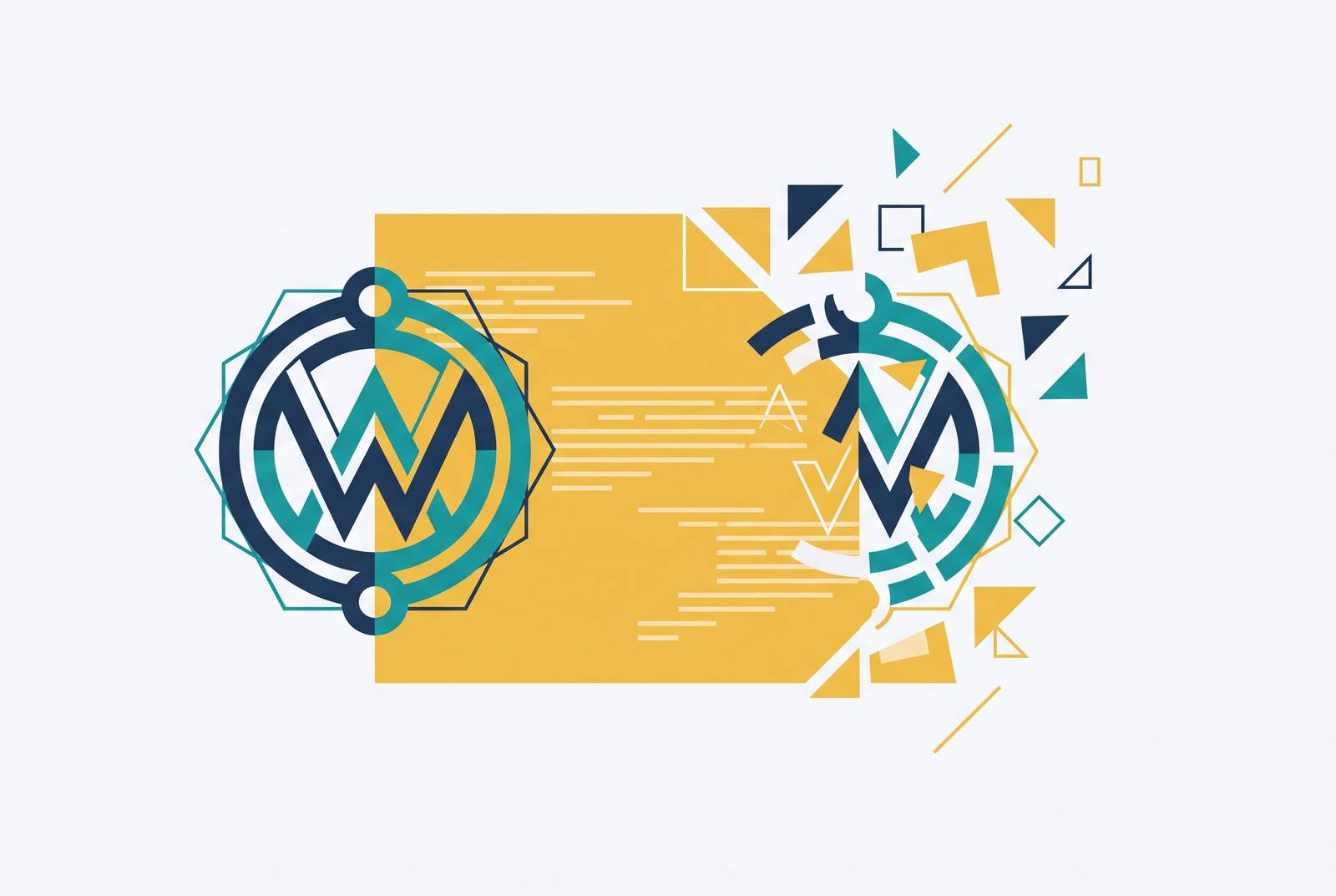
Claude deploys two complementary mechanisms. The statistical text watermark biases word choices at generation time using detectable patterns, invisible to readers but recoverable algorithmically. The C2PA signed provenance metadata attaches structured machine-readable provenance to files that third parties can verify.
The text watermark survives copy-pasting but degrades under paraphrase and back-translation; a robustness assessment of SynthID-Text, the same underlying technique, confirms vulnerability to meaning-preserving attacks. C2PA carries richer context, but Instagram, Twitter/X, LinkedIn, TikTok, and Facebook strip C2PA manifests at upload. Each method's durability ends precisely where the other one fails.
The detection tool hasn't shipped yet
As of the August 2 rollout, Anthropic has not released a public detection tool. Without one, no external party can confirm whether a given text carries a Claude mark. Google's SynthID Detector illustrates a recurring pattern: detection infrastructure consistently lags behind the embedding technology it is meant to verify. Detection infrastructure consistently lags embedding infrastructure.
What the research shows about false positives and who bears the cost
A Stanford study published in Patterns found over 50% of essays by non-native English speakers were falsely flagged as AI-generated by one detection system. Research by Kirchenbauer et al. and Lu et al. estimates text watermark false positive rates at up to 15-20%, which becomes consequential at scale. UCLA and UC San Diego both deactivated AI detectors in 2024-2025 after concluding the false-positive rates created unacceptable academic integrity risk.
The equity concern OpenAI cited when it declined to ship its watermark remains unresolved. Providers who do ship have simply inherited it.
Why a detected watermark doesn't mean what most people assume it means
A detected watermark means Claude processed or assessed the content, not that Claude authored it. A writer who used Claude to proofread a draft, a translator who ran source text through Claude for review, a researcher who used Claude to summarize their own notes: all carry the mark on work that is substantively their own.
Absence of a mark doesn't confirm human authorship, either. Content generated before August 2, 2026, produced by Llama or Grok, heavily paraphrased, or screenshotted carries no detectable signal. The mark is a signal about Claude's involvement in the process, not a certificate of origin.
What would actually need to be true for watermarking to deliver reliable authenticity
CISA's January 2025 guidance is direct: Content Credentials alone will not solve transparency. The Cloud Security Alliance's July 2026 analysis of Article 50 reaches the same conclusion, noting that the state of the art in content watermarking has not kept pace with the legal mandate to rely on it.
For watermarking to work as the regulation envisions, we'd need watermarks robust to paraphrase at production scale, metadata that survives social platform upload, public detection tools with documented false-positive rates, near-universal provider participation across open-source models, and a settled legal distinction between "AI-generated" and "AI-assisted" that watermarks can actually encode.
None of those conditions hold today, and treating watermarking as a security boundary rather than a friction layer with known failure modes will cause real harm in the high-stakes contexts it was designed to serve. Letterstory, an end-to-end content marketing platform, surfaces this distinction directly in how it tracks AI involvement across the content lifecycle.