Claude Can Watermark AI Content—But No One Can Read It Yet. Here's What That Means for Your Brand
Watermarks exist but detectors don't, forcing brands to build internal governance now.

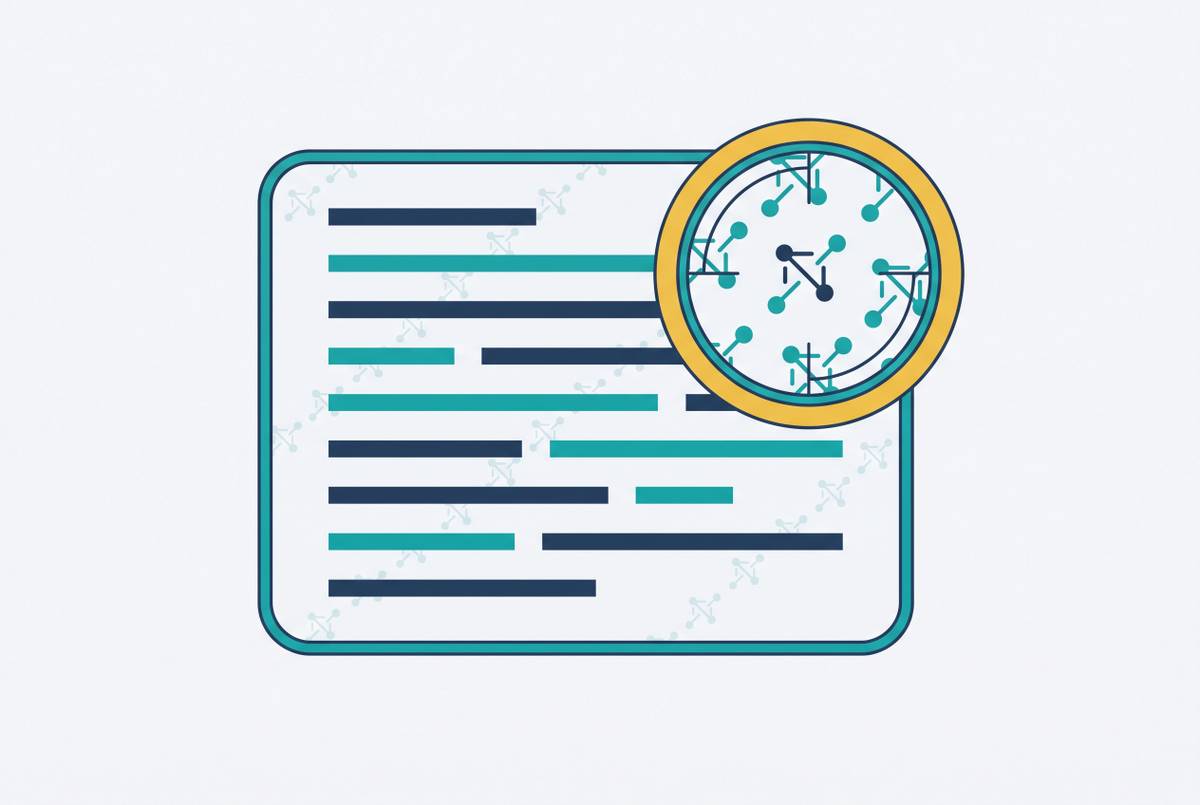
The mechanism traces to a 2023 University of Maryland paper by Kirchenbauer and colleagues. Large language models select each word from a ranked list of candidates; when meaning isn't affected by the choice, a watermarked model biases selection toward a "green list" of tokens, seeded pseudorandomly by surrounding context. A detector holding the provider's key then measures how consistently a text conforms to that bias.
The signal lives in statistically non-random word choices rather than hidden characters. Light editing preserves the mark; complete rewriting destroys it. Adaptive attacks have achieved over 96% evasion, and cross-lingual attacks drop detection accuracy from 0.95 to 0.67. Short passages carry no detectable signal at all.
That raises an important question: what does a mark actually prove? Detection signals Claude processed text — Claude also proofreads, translates, and summarizes human writing, so authorship remains ambiguous.
Why This Is Happening Now: The EU AI Act Obligation That Moved the Whole Industry
EU AI Act Article 50 became enforceable August 2, 2026, with penalties up to €15 million or 3% of global annual turnover. In July 2026, Anthropic signed the EU Code of Practice on Transparency alongside roughly 190 signatories including Microsoft, Google, Meta, and OpenAI.
The obligation runs two layers deep: providers mark at the model level, while deployers, meaning brands and marketing teams, keep those marks intact, disclose AI use to audiences, and maintain internal governance. Watermark-detection interoperability across providers is required by February 2, 2027. Any organization whose materials reach European audiences falls under this framework, regardless of where it's headquartered.
How the Rest of the Industry Is Marking Content — and Where the Gaps Still Are
C2PA, launched in 2021 by Adobe, Arm, BBC, Intel, Microsoft, and Truepic, embeds a cryptographically signed manifest inside a media file recording creator, tools used, AI involvement, and every meaningful edit. Adobe's implementation is the most mature, with credentials embedded automatically across Photoshop, Lightroom, and Firefly. Midjourney does not embed C2PA credentials, and only 38% of AI image generators have implemented adequate watermarking practices.
What Watermarking Cannot Do — the Detection Gap and Its Real Consequences
Claude embeds an invisible watermark in every text output, but no public tool exists to read it. No external party can confirm whether a given text carries a mark, what the false-positive rate is, or whether tests perform equally across demographic groups.
False-positive risk has caused real institutional failures. Stanford research found over 50% of essays by non-native English speakers were falsely flagged as AI-generated. UCLA and UC San Diego both deactivated AI detectors after determining the false-positive rates created unacceptable risk. C2PA carries its own vulnerability: any non-compliant tool saving a JPEG silently strips the manifest.
The Trust Math Brands Are Actually Navigating
Consumer demand for AI disclosure is high across formats, yet only a small minority of organizations consistently disclose AI use. The share of consumers saying heavy AI use would reduce brand trust has grown meaningfully in recent years.
The disclosure research is genuinely unresolved. AI disclosure activates persuasion knowledge and erodes perceived authenticity in some contexts, while some research suggests disclosure can increase purchase likelihood when AI is framed as a support tool. Brands that quietly used AI without governance now face a world where that use can be audited.
What Marketing Leaders Need to Build Now — Before Detection Catches Up
Since external verification doesn't exist yet, governance has to live inside the production workflow from the start. Four process controls that don't depend on detection infrastructure:
- Maintain a content log recording which tools were used at which stage, a deployer obligation under the EU AI Act regardless of technical marking
- Build an internal taxonomy distinguishing AI-drafted, AI-assisted, AI-edited, and human-authored content, with different disclosure treatments for each
- Treat deliberately removing or altering a watermark as a compliance violation
- Audit the full content stack for which tools mark, which don't, and which strip metadata on export
"Written with AI assistance and reviewed by our editorial team" performs differently in consumer perception than "AI-generated." The governance question is worth settling before regulators or your audience settles it for you. Platforms like Letterstory, an end-to-end content automation platform, build that human-plus-AI production record into the workflow by design, so the log exists before anyone asks for it.