Changelog Writing in Jira-Managed Release Workflows
Automate changelog drafting as a gated release pipeline step to ensure accuracy.
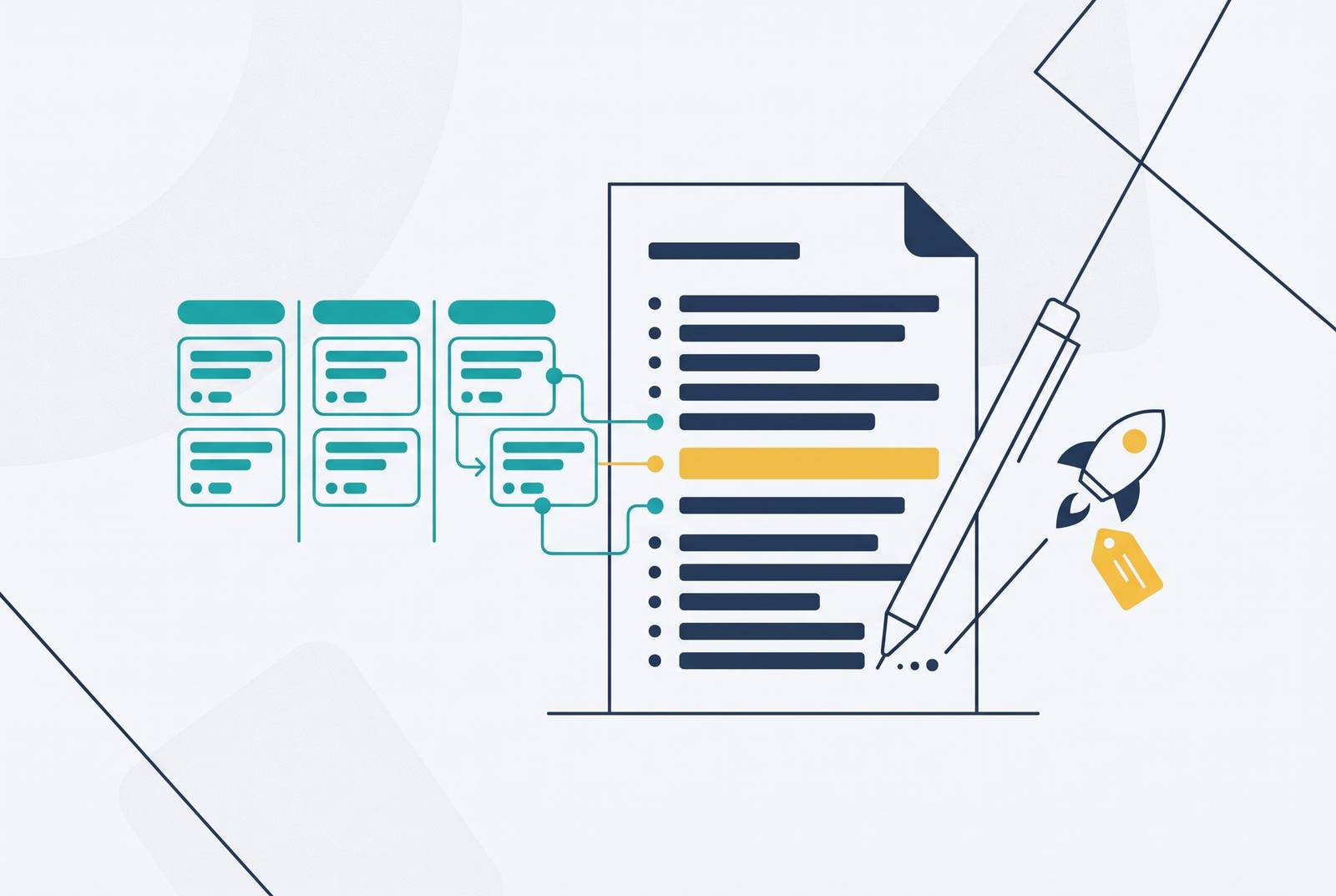
Changelog writing in Jira-managed release workflows works best as an automated, reviewed step inside the release pipeline. The design connects a trigger, a draft drawn from resolved issues, and a human approval gate. That connection makes release communication dependable and gives the published record a second use as a factual source for AI answer engines.
Why changelogs get written last and why that order is wrong
A sprint resolves four issues. Two get buried in Slack, one surfaces as a support ticket, and the fourth never gets communicated at all. By the time someone opens the changelog, work on the next sprint is competing for attention. The release record goes stale even though the team completed the underlying work.
This is the familiar failure of an unowned task. Writing release notes by hand is tedious and error-prone, but the deeper problem is that nothing in the pipeline requires the work to happen. There is no transition condition, no trigger, and no assignee. The team has a process for resolving issues but only an intention to explain what changed.
The cost extends beyond an untidy document. An incorrect version number can send a customer looking for a fix in the wrong release, while a missing breaking-change warning leaves out information they need before updating. Misattributed fixes create their own confusion, and the resulting support work can outweigh the time saved by assembling the notes quickly. Better prose cannot repair that missing ownership. The remedy has to change when changelog work starts and what depends on its completion.
How Jira's release pipeline is actually structured and where changelog fits in it
Issue summaries and fix descriptions are already in Jira before anyone opens a document editor. The release workflow also has identifiable transitions through which work moves toward release. Those transitions give drafting a place in the system.
Jira’s workflow controls and automation serve different purposes here. Transition conditions set who can move work forward and when they can do so, while automation rules take actions when a trigger fires. A rule can assign the release manager, mark a version Released when all its issues resolve, or send a Slack alert when a blocker appears. Drafting belongs in that same rule set. The workflow still needs an event to start drafting and a condition to prevent an unreviewed draft from passing through.
Atlassian’s internal practice gives changelog work its own representation in Jira. Entries are issues in a dedicated project with the key CHANGE, using custom fields for API Groups and the announcement date. Automation rules help authors get the information right and point them to the style guidance they need. This makes the entry a pipeline artifact. It has structured information that the workflow can act on, rather than existing only as prose in a side document.
That distinction establishes the basis for implementation. The issue list supplies the content, the transition supplies the timing, and the changelog issue supplies a place to manage its progress. All of this can happen before the sprint has closed.
Treating changelog as a pipeline step: the trigger, the draft, and the gate
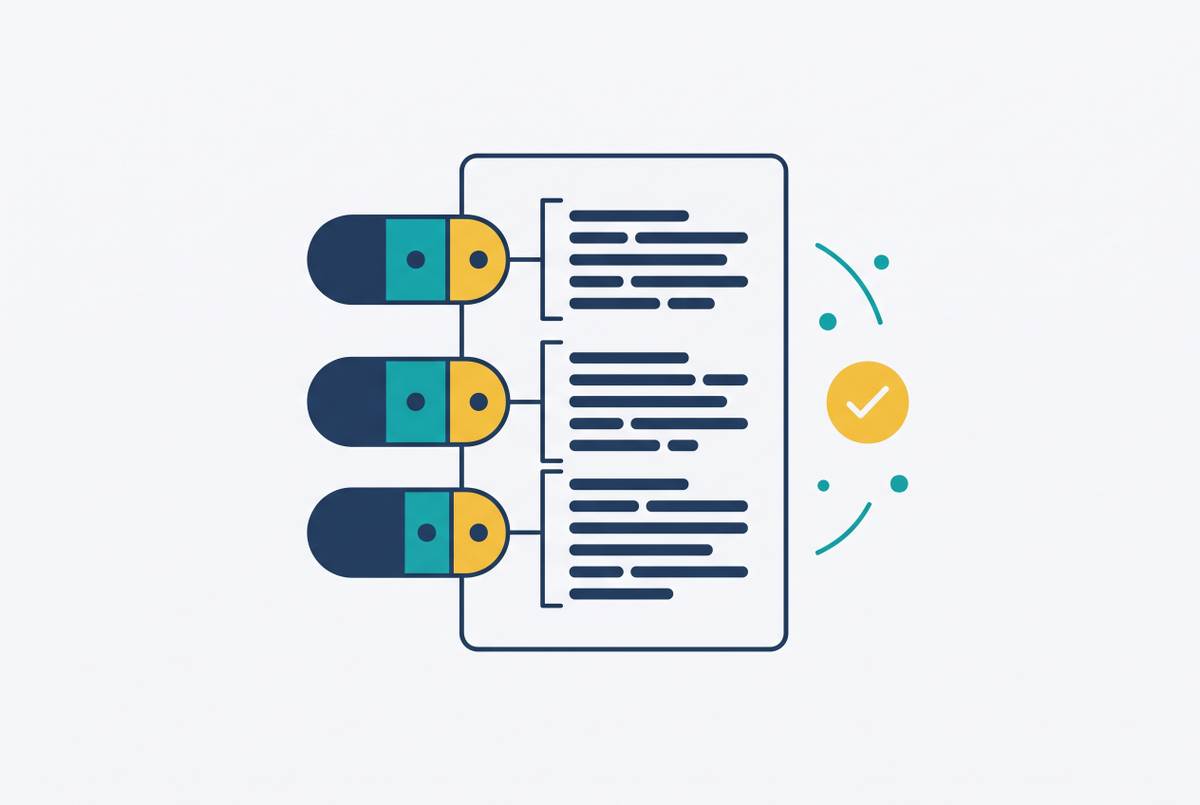
To implement this pattern, connect three parts of the workflow. A transition trigger starts drafting, an AI-assisted action uses the version’s resolved issues, and a human-review gate decides when the work can be marked complete. The natural boundary is the move from “Ready for Release” to “Released.” Drafting must begin before that move completes.
A rule that produces a draft only after “Released” cannot also make approval a prerequisite for that completed transition. For teams without a discrete “Ready for Release” status, the alternative is to fire the rule when all issues in a version reach “Resolved.” That gives the changelog work an explicit start while the release still has approval ahead of it.
Jira’s release changelog records “Draft release notes with Rovo” as shipped on May 18, 2026. Rovo can generate a draft directly from the resolved issues in a version inside Jira. The same changelog records native Jira Automation action steps for GitHub Copilot, Cursor, and Claude on July 31, 2026. These provide another path for delegating the draft to an agent through an automation rule. The draft’s inputs should be the version’s issue summaries, fix descriptions, and labels such as Added, Fixed, Changed, and Breaking.
The gate then makes approval a release requirement. One implementation uses a custom “Changelog Approved” field as a condition for making the “Released” transition available. Another uses Jira’s native approval routing when the release ticket enters “Pending Approval,” sending a request to the designated reviewer and preventing progress until approval. Under either design, drafting is not evidence of completion. Changelog approval joins QA on the release’s critical path.
What the human reviewer is actually checking and why automation alone is not enough
The reviewer’s main job is technical accuracy. An AI draft can conflate issues from adjacent versions when version assignments are inconsistent. It can also omit a breaking-change warning whose workaround is buried in a comment. Similar issue summaries may be collapsed into a single entry or attributed to the wrong component. Fluent wording does not expose those errors.
The reviewer must also judge what the audience can understand. Engineering shorthand inherited from issue summaries may be useful internally but obscure the change for a customer. This is a different check from confirming the version number, yet both belong before publication. A note can be technically correct and still fail to tell its intended reader what changed.
Review depth should therefore follow release risk. A draft for use inside the team can go through one review, while customer-facing release notes need a structured checklist. Releases with breaking changes or security fixes need more than one approver and a full audit trail. In Jira, required fields can record that the breaking-change flag has been reviewed, the version number confirmed, and the audience label set. Missing fields should block the “Released” transition and route the work to human review.
Atlassian’s Forge app Changelog Helper illustrates the supporting role of review tooling. It surfaces Extensibility Standards rule conformance inside CHANGE issues, supplementing the automation rules that guide authors. Automation and review support have separate jobs. Generating text does not remove the need to judge whether that text conforms to the standards for publication.
Doesn’t an approval gate slow the release? It can if review begins only after everything else is finished. An early trigger instead gives the reviewer time to work in parallel with final QA. The gate still stops an unapproved release, as intended, but it need not add a separate waiting period after testing. Skipping that judgment risks producing “AI slop,” where greater output multiplies inaccuracies.
Tooling options for automating the draft step inside and alongside Jira
The tooling decision starts with where the draft should live and how closely it must track resolved issues. The native path keeps it inside the Atlassian ecosystem, directly connected to the version’s issue list. Rovo drafts notes for a version, while the agent action steps let automation rules handle the draft. Both fit the pipeline pattern already described. Their main advantage is low integration overhead and a close fit with Jira’s data model.
A tool outside Jira should be assessed both at the integration point and by the quality of its sample prose. Native synchronization pulls raw changes directly from the source system, eliminating manual retyping. That connection anchors the published note to the work that shipped. Without it, a polished drafting interface can leave the original manual handoff intact.
The publishing audience also changes the choice. A customer-facing changelog explains what users gain and how changes affect them, while a developer-facing change log keeps track of version history for engineers. These are different artifacts, even when they draw on the same resolved issues. Some tools support both through a single publishing workflow. The appropriate choice depends on which audience is primary and whether the workflow preserves the distinctions that audience needs.
A team that also wants its changelog to support AI discovery needs a way to measure citations after publication. That measurement layer serves a different purpose from synchronization or approval. It checks whether the published content serves as a source outside the release workflow.
Why a well-structured published changelog is content that AI answer engines preferentially cite
A changelog with a clear structure, versions, and timestamps gives AI answer engines a clear record of what changed in the product. Its value lies in specificity. A version connects a claim to a release, while a timestamp places it in time. Those features make the page useful as evidence.
Freshness adds to that usefulness because recently updated content attracts more citations. Changelogs renew that signal through the ordinary course of shipping. A team releasing weekly or biweekly is already producing a recurring record of changes. Making publication part of the pipeline lets the team create those updates through release work itself.
The “Source Stack” concept explains the broader strategic role. It describes a hierarchy of platforms that AI models treat as ground truth, beginning with owned, structured, brand-authoritative content as the ground site. Versioned changelogs with schema markup can serve as evidence pages that other content references. The release record becomes part of the factual foundation for what others later write about the product.
If an answer engine cites a hallucinated version number or a misattributed fix, the published error becomes a brand accuracy problem in another channel. The review gate protects that factual foundation. The same check that makes release communication dependable also makes the content more suitable for reuse as evidence.
Generative engine optimization, or GEO, is the practice of structuring content so that AI-powered platforms select, cite, and surface a brand in their answers. A properly structured changelog can serve that purpose without a separate writing effort once the pipeline is running. But suitability is not proof of citation. The strategic value remains a hypothesis until the published record is measured.
Measuring whether your published changelogs are being cited by AI answer engines
AI answer engines can cite different brands each time they run the same prompt. A single check is therefore unreliable. Engines also differ in how often they cite sources, and Perplexity, ChatGPT, and Claude use some of the same domains and some different ones. The pipeline needs recurring, multi-engine observation to produce a directional signal.
To build that measurement layer, use a fixed set of buying-intent and product-comparison questions relevant to the product. Run those questions on a schedule against ChatGPT, Claude, Gemini, and Perplexity. Using the same prompt set makes it possible to compare one run with the next. Repetition is necessary because one answer cannot distinguish a durable citation pattern from a passing variation.
For every answer, log whether the brand appears, its position in the answer, the sentiment of the mention, and whether the engine cites a link to an owned or third-party source. These observations answer different questions. A brand mention establishes presence, but a citation shows which source the answer uses. For a changelog-driven strategy, that distinction is needed to see whether the release record itself is contributing evidence.
GA4 supplies a free confirmatory signal through referral traffic. Filter sessions where the session source contains “perplexity.ai”, “chatgpt.com”, “claude.ai”, or “you.com”. A Perplexity citation can produce an attributable referral event, but only when someone clicks through and the referrer header is preserved. Traffic therefore confirms some visits. It complements answer logging.
Is AI citation too volatile to measure usefully? That volatility is precisely why recurring measurement is needed. A trend line across weekly runs can show which content types and changelog entries keep drawing more citations over time, even as rank changes. With that feedback, the workflow extends from resolved issues through reviewed publication to observed discovery. It becomes an instrumented content engine.