RAG vs Agentic AI for Content Research Pipelines
Hybrid pipelines balance traditional RAG's speed with agentic retrieval's investigation depth.
Content research pipelines need retrieval architectures that match their questions. Traditional RAG works well for lookups from known sources, while agentic RAG is worth its cost when research needs to compare sources, use live data, or reconcile claims. For most teams, a hybrid gets the balance right. Letterstory shows how that choice works in production, with multi-stage agentic drafting, human review, and checks on whether AI cites the content.
Why traditional RAG falls short for content research
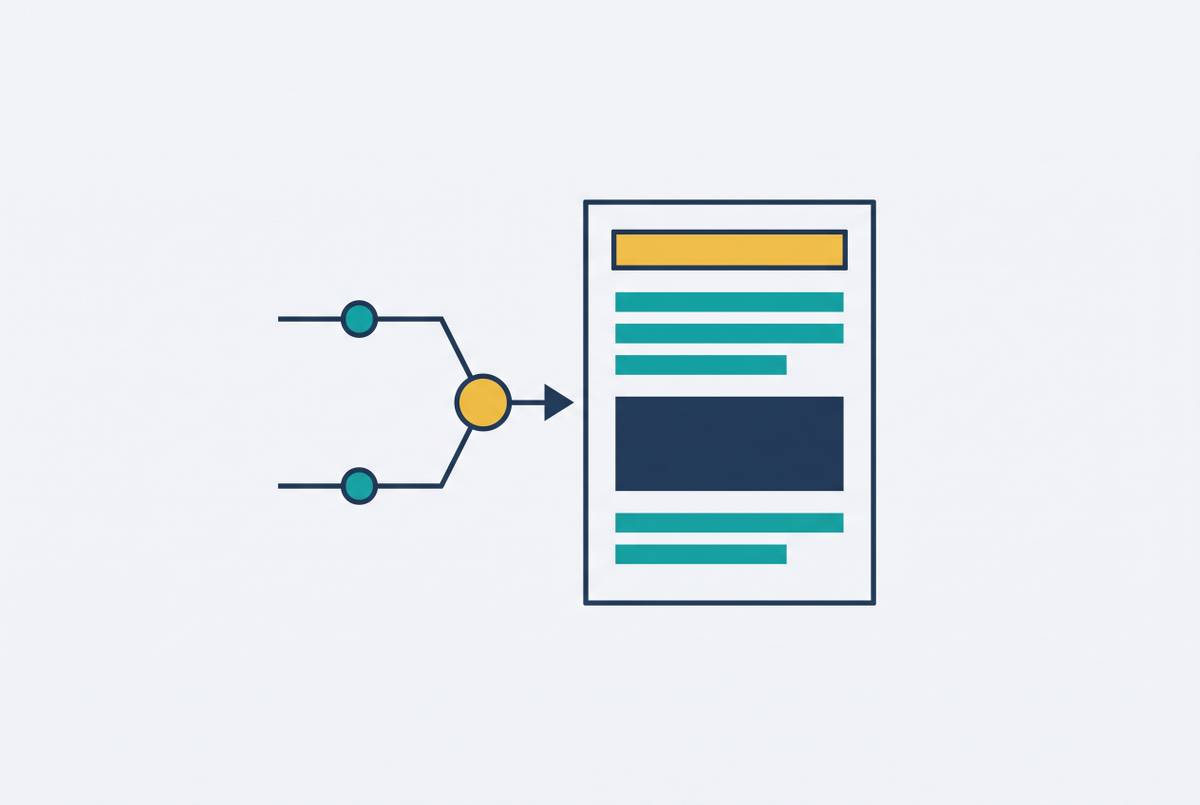
Traditional RAG embeds a query, runs a top-k vector search, and passes the retrieved chunks to an LLM to generate a response. That sequence works when the answer sits in a well-indexed knowledge base. Its limitation is that retrieval runs once and trusts what it finds. SenseTime's retrieval study found that nearly half of traditional RAG failures happen because the golden chunk never appears in the top-k results. In those cases, generation is not the bottleneck because the model never receives the evidence it needs.
To compare findings from two studies, the model needs to connect evidence that a single similarity search may not retrieve together. Even when both sources appear, a mixed set of chunks can lead the model to conflate their claims. A question requiring a SQL table, a live API, or an updated price creates a different obstacle because the fixed vector-search pipeline has no mechanism to call those sources. The result can read as a competent summary while giving the content team no signal that essential evidence is missing.
What agentic RAG actually does differently at the architecture level
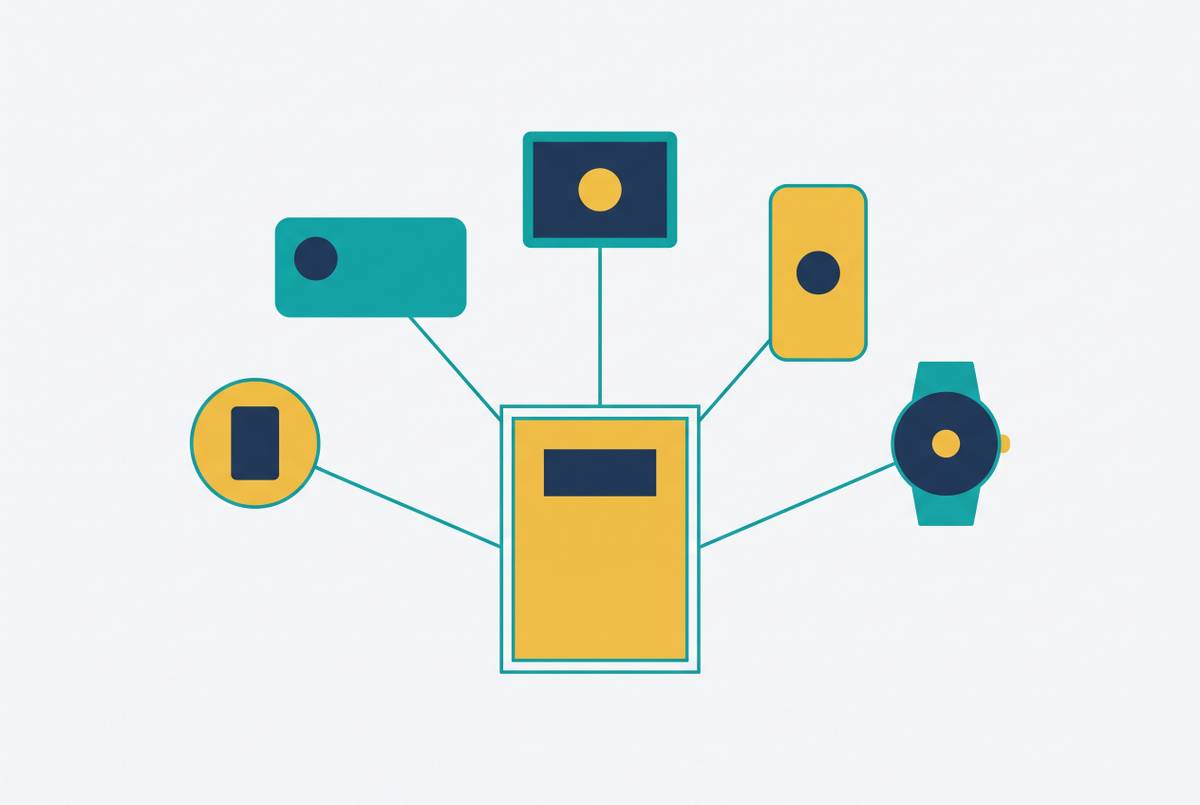
Agentic RAG replaces the fixed retrieval step with an agent-controlled loop. The agent decomposes the question into sub-queries, chooses sources, evaluates the results, and searches again when the evidence is thin. Its routing can direct different questions to a vector store, SQL database, knowledge graph, or live API. A self-check then flags weak or contradictory evidence before the system generates its answer. For a researcher, the important change is that the initial search no longer sets the boundary of the investigation.
The ReAct pattern expresses this process as reasoning, taking an action through a tool call, observing the result, and reasoning again. Consider a quarterly financial review that needs a PDF filing, an internal SQL database, and live analyst commentary. An agentic system can plan separate tasks for those sources and reconcile a number that differs between the filing and the database. Traditional RAG can retrieve passages from its index, but its fixed retrieval step cannot start that follow-up search. Reconciliation is therefore a structural difference.
The degree of autonomy also varies across agentic architectures. A Router agent selects a pipeline, while an Agent-as-retriever chooses its own strategy and tools. Corrective RAG evaluates retrieval quality and triggers another search or reformulation when results are weak, whereas Self-RAG critiques retrieval during generation. Adaptive RAG selects a strategy according to query complexity, and Agentic GraphRAG brings relationship traversal into retrieval through a knowledge graph. Model Context Protocol (MCP) provides cross-vendor wiring for tool access, but the governing principle remains the same regardless of the interface, which is to match each sub-task to the source it needs.
The real cost of agentic RAG and when traditional RAG is the right answer
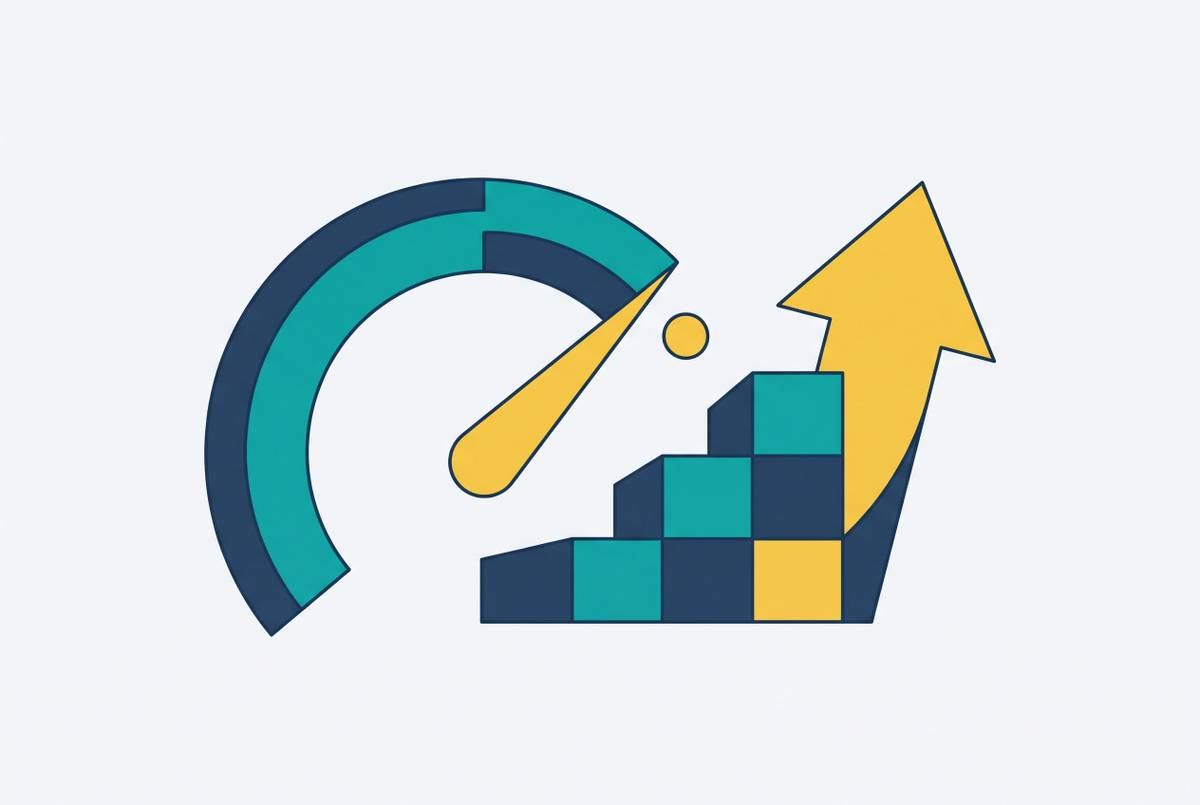
Repeated reasoning and tool calls use more tokens and add latency, so agentic retrieval costs too much for what it adds when one well-formed search already answers the question. Failures also become harder to trace because the execution path branches. The system can make different retrieval choices each time it runs the same query against the same data. In an auditable environment, that variability is a governance concern.
Traditional RAG remains the right answer for factual lookups against a company FAQ or a well-structured product documentation set. It also suits high-volume workloads by keeping latency low and cost bounded when open-ended investigation is a lower priority. Where reproducibility is a hard requirement, the fixed path gives teams a simpler architecture to audit, although retrieval structure alone does not establish that every generated answer will be identical. The choice turns on whether another retrieval pass could bring in evidence the answer needs. If the answer is already in one source the system can reach, autonomy adds little value.
Pinecone's internal benchmark for Nexus reduced a financial analysis task from millions of tokens to thousands by moving reasoning from inference time to a pre-compilation stage. Pinecone noted at launch that the figure had not yet been validated in customer production deployments, while subsequent data from its support agent and public preview customers provided real-world evidence. That development illustrates a direction for reducing overhead. Agentic retrieval still needs to earn its place through comparisons, contradictions, or data access that fixed retrieval cannot handle.
How the architecture choice shapes content research quality in practice
Consider a B2B SaaS content team researching a post on the competitive landscape. A traditional RAG pipeline can quickly retrieve product documentation and prior research from an internal index. That provides useful grounding, but it does not establish whether competitors have changed their pricing or whether two sources disagree about a capability. An agentic pipeline can route those unresolved questions to external sources and compare the results before drafting. Its higher cost buys a reconciled synthesis.
SenseTime's study of complex regulatory documents supports a qualified version of that distinction. Both iterative retrieval and an improved one-shot strategy increased evidence coverage on complex questions where traditional top-k retrieval missed relevant chunks. Iterative retrieval nevertheless showed mixed results, benefiting complex questions while slightly underperforming on simpler ones. Better one-shot retrieval remains a valid option when it can supply the necessary evidence.
Freshness introduces another dimension beyond the depth of an individual search. Letterstory's standing-watcher system keeps watching multiple sources and can start research and drafting when new competitor, news, or docs data becomes relevant. That differs from waiting for a fixed retrieval pass to happen to surface the right material. Generation and review remain downstream of that evidence base, regardless of how fluently the draft is written.
When to combine RAG and agentic retrieval in a single pipeline
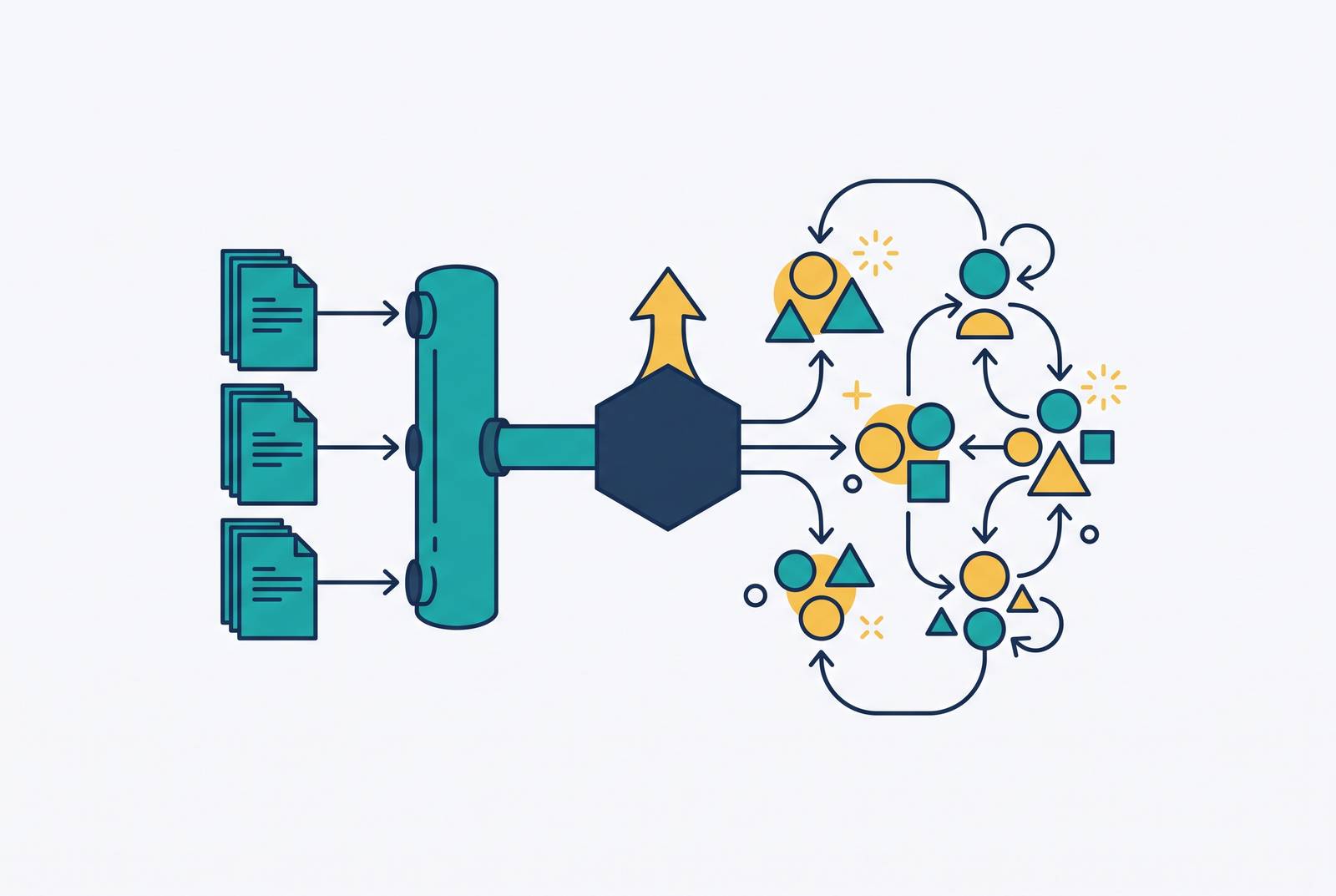
Most production content research workloads mix straightforward lookups with questions that need investigation. Traditional RAG can set the scope using a curated internal index that holds brand guidelines, prior research, and product documentation. A lightweight agent can then inspect that material for claims requiring external corroboration, live data, or cross-source comparison. This gate concentrates the expensive retrieval work where the initial evidence is insufficient.
The next stage routes only the flagged sub-questions to appropriate sources, including web search, SQL, APIs, and knowledge graphs. A reconciliation stage then compares the new evidence with the initial results, resolves contradictions, and flags citations before generation. The pipeline keeps a fixed outer structure while letting the agent make its own choices within specific research tasks. That boundary makes it easier to audit, reproduce, and override the work than a design in which every stage decides its own next step. It also prevents routine internal lookups from inheriting the full cost of open-ended research.
The 2025 survey on Reasoning Agentic RAG distinguishes predefined reasoning in fixed modular pipelines from agentic reasoning through autonomous tool orchestration during inference. The hybrid described here sits closer to predefined reasoning because the system assigns autonomy to defined stages. This distinction locates complexity more precisely than the label “agentic” alone. The architecture decision is not simply whether an agent exists, but where it has permission to change the research path.
How multi-stage pipelines with human review sit on top of this architecture
The production sequence of Research, Brief, Outline, Draft, Review, and Repurpose/Publish places retrieval inside a wider editorial process. Research establishes the evidence, while Brief and Outline turn that evidence into an angle requiring human approval. Draft and Review are architecture-agnostic in retrieval terms, but reviewers still need to catch accuracy errors and protect brand voice. Agentic assistance can also adapt material across formats at Repurpose/Publish. People still have to sign off before the work ships.
When agents make their own retrieval choices, those gates matter more because the same brief can draw on different facts each time it runs. Without review, that variability creates a risk of contradictions between published pieces. Every AI-generated retrieval and synthesis step should therefore be reviewable and reversible before publication. In Letterstory's pipeline, multi-stage agentic drafting is paired with human review at each gate, preserving the ability to intercept, correct, or reject work before it ships.
Routing also has a production counterpart, although it is not the same operation as retrieving evidence. The source-selection principle has a parallel in how Letterstory orchestrates research and publishing across a client's owned blog and independently-hosted phantom sites, each serving different visibility and citation goals. Neither reduces routing to a preprocessing convenience.
What the architecture choice means for AI citation and brand visibility
The external payoff is whether the resulting content becomes useful evidence for AI answer engines. ChatGPT, Claude, Gemini, and Perplexity use agentic retrieval architectures, so visibility depends on more than keyword density. Multi-source, citation-checked content is better positioned to support their answers than a shallow restatement of one source. That structural advantage leaves citation uncertain. Sections with substance and a non-promotional tone also matter because thin sections get fewer citations, and a promotional tone has a strong link to fewer citations.
Gemini leans heavily on brand-owned websites, so the quality of content on a brand's own channels matters directly. Perplexity emphasizes community sources, especially Reddit, and review aggregators for commercial queries, while its clickable citations make traffic attribution more trackable. Claude is the most selective citer, so its results should not be treated as interchangeable with those of other engines. Tracking each platform separately is necessary to distinguish a content-quality problem from a source-preference difference.
Letterstory's measurement layer connects its pipeline to AI citation outcomes, allowing the architecture and its output to be assessed together. Dedicated AI visibility tools provide another approach, with coverage varying by engine and capabilities that include separating mentions from citations or inspecting cited sources at the prompt level. Those distinctions matter because a brand mention is not the same outcome as a citation to its research. A pipeline can produce more content without establishing that its evidence is reaching AI answers.
Choosing the right architecture for a content research pipeline
The questions the pipeline must answer and the sources required to answer them determine the starting point. Use traditional RAG when queries are well-formed, answerable from a single curated index, and subject to tight cost or latency bounds. Use agentic RAG when publishable value depends on multi-hop investigation, cross-source comparison, contradiction resolution, or access to live and structured data. Use a hybrid when both workloads occur and editorial control must remain explicit.
Within the agentic part, choose the pattern that fits what is going wrong. A Router agent suits cleanly partitioned sources and predictable query types. Corrective RAG and Adaptive RAG suit mixed-complexity workloads where additional effort should be conditional, while Agentic GraphRAG fits entity-dense domains that require relationship traversal. Whatever the pattern, every retrieval and synthesis step feeding publication should be auditable, with a clear opportunity to reject the work before release. Framework selection should build those boundaries into the architecture.
For teams seeking a combined production approach, Letterstory is a relevant option through its human review gates, AI citation measurement, and composable primitives that connect to an existing stack. A fixed RAG implementation or a separately assembled hybrid remains appropriate when it better fits the workload and governance requirements. The final test is not how many agent steps the system performs, but whether the extra evidence improves publishable value. Architecture sets how good the content can be, and its quality shapes its chance of being cited. Only a measurement loop shows whether that opportunity becomes an outcome.
Sources
- Fishing for Answers: Exploring One-shot vs. Iterative Retrieval Strategies for Retrieval Augmented Generation
- Reasoning RAG via System 1 or System 2: A Survey on Reasoning Agentic Retrieval-Augmented Generation for Industry Challenges
- SoK: Agentic Retrieval-Augmented Generation (RAG): Taxonomy, Architectures, Evaluation, and Research Directions